Showing posts with label inspiration. Show all posts

Thursday, December 31, 2020

For the New Year and Beyond

photo taken on walk, December 2020

Hear this blessing in song featuring Kids from Different Nations. Beautiful.

With wishes for a blessed and healthy new year to all who stop by here at Words and Such. This post marks the completion of eleven years of blogging. What a rich and blessed ride it has been. Thanks to all whom I've met on the journey and any who randomly drop by. May all your (writing and otherwise) dreams come true.

Happy New Year!
_________________________________________

Monday, October 26, 2020

Thursday, September 20, 2018

Ansel Adams and September's Inspiration

Half Dome, Merced River, Winter, by Ansel Adams, a print (Amazon
"I knew my destiny when I first experienced Yosemite." --Ansel Adams

We finally made it, hubby and I, to the Ansel Adams exhibit at Cincinnati's Taft Museum before the exhibit's closing date. We would have missed a great treat if we had let this one slip from our fingers. I've always admired the iconic black-and-white photos of nature, particularly of our national parks, that Mr. Adams is famous for, but to try and absorb the genius, beauty, and compelling images all assembled in one place as these were, was a tremendous opportunity.

Cincinnati Taft Museum
Ansel Adams, A Photographer's Evolution was on view at the Cincinnati Taft Museum most of the summer, ending September 16. Billed as a showcase of a career-spanning collection of the photographer's work, the display attempted to "trace the evolution of Adams' magnificent style," beginning with rare early scenes from the 1920s and progressing to later prints he made shortly before his death (source). "Spanning the photographer's entire career," words displayed for the visitor at the beginning of the tour stated, "this exhibition reveals Adams as a poet of light both in the field and in the darkroom." The exhibit featured 42 of these marvelous photographs. Mesmerizing and instructional at the same time. Image poet and photographer in the same package. I loved it.

Ansel Adams (1902-1984), photographer and environmentalist, was born in San Francisco. He experienced the aftershocks of San Francisco's great earthquake as a four-year old in 1906. He contracted the Spanish Flu during the 1918 flu pandemic and became seriously ill, taking several months to recover. He aspired at first to a musical career after years of studying the piano. But ultimately, after his father gave him his first camera, a Kodak Brownie box camera, after his first visit to Yosemite National Park in 1916, he turned to photography as his passion and purpose. "The splendor of Yosemite," he wrote of his first view of the valley, "burst upon us and it was glorious...One wonder after another descended upon us...There was light everywhere...A new era began for me" (source).

And so, as I often do, I took a look at this man, Ansel Adams, and what he might have left behind in words as well as art. Highlights of my discoveries:

--"Suddenly I saw what photography could be: a tremendously potent, pure art form, and austere and blazing poetry of the real."

--"Photography is not only what you see, but also what you feel."

--"When words become unclear, I shall focus with photographs. When images become inadequate, I shall be content with silence."

--"How high your awareness level is determines how much meaning you get from your world. Photography can teach you to improve your awareness level."

--"I can look at a fine art photograph and sometimes I can hear music."

--"Today we must realize that nature is revealed in the simplest meadow, wood lot, marsh, stream, or tidepool, as well as in the remote grandeur of our parks and wilderness areas."

--"I hope that my work will encourage self expression in others and stimulate the search for beauty and creative excitement in the great world around us."

--"Life is your art. An open, aware heart is your camera. A oneness with your world is your film. Your bright eyes and easy smile is your museum."

And finally, a quote we writers can identify with:

--"One of the most important pieces of equipment, for the photographer who really wants to improve, is a great big wastepaper basket."

"In 1975," the exhibit noted, Adams "ceased making fine art prints for the open market. He selected 70 negatives he saw as his most important works--known collectively as the Museum Set--and began printing them for placement in museums." Six images in the Taft's gallery were among the 70 Adams selected, chosen from a field of over 2500 photographs attributed to his seven-decade career (source). What an agonizing process that must have been, to narrow such a wide range of images into only a few dozen for display. How does one choose one equally beautiful photograph over another?

September's inspiration: Ansel Adams, photography, poetry in photography, beauty in our world, dedication, passion. What artist--photography or other medium--inspires you? What has been September's inspiration for you so far?
_________________________

Friday, October 24, 2014

Ocean Advice and a Thousand Words

Ft. Walton Beach, FL October 2014
Ocean Advice

Let your cares drift away.
Seas every opportunity.
Adapt to changing tides.
Surf life's rough waves.
Harbor strength and perseverance.
Don't be a shellfish.
Bet on a shore thing.
*Love*

We were fortunate to take a short trip to the beach this past week and, wow, what a gift. Some of my favorite pictures include:


"Let your cares drift away...
...seas every opportunity...   
...adapt to changing tides...
...surf life's rough waves...
...harbor strength and perseverance...
...don't be a shellfish...
...bet on a shore thing."
Thanks to Valerie and her pinterest board for the poem :-)                                          

And speaking of gifts, the best one was to drive up for the weekend from the beach to son and family's house in sweet Alabama to see, for the first time, our newest grandbaby, sweet little Joy.

*Love*
Drinking it all in, savoring, storing it up for the winter months ahead. When it's the coldest here, I'll be imagining those long walks along the water's edge. Like they say, "A walk on the beach is worth a thousand words." Hopefully this latest seaside "retreat" will stir an actual thousand words, and more, in writing projects in the weeks ahead.

Where do you like to go for a retreat--writing or otherwise?
________________________

Tuesday, September 9, 2014

And The Winner Is...

sample of flowers from hubby's garden 2014

"Just living is not enough," said the butterfly. "One must have sunshine, freedom, and a little flower." --Hans Christian Andersen

If asked what we might add to Mr. Andersen's list of must-haves, what would be your answer? I suggest "friends"!

And with that lead-in, I announce the **winner** of my recent give-away contest of Jessica Lawson's delightful debut MG novel, The Actual and Truthful Adventures of Becky Thatcher (review found here)--blogger friend, and author in her own right, Karen Lange! Karen blogs over at Write Now, "exploring the adventurous writing life."

Congratulations, Karen. The book will be on its way to you here real soon. 

Thanks to all who entered the drawing--may you all have a great rest of the week!
_______________________________ 

Friday, February 14, 2014

10 Things Writers Have in Common with Woodpeckers

"The woodpecker might have to go." 
Courtesy of christianfunnypictures
Okay, I finally got a walk in this morning before getting blasted with yet another wave of snow (3"-5" predicted again tonight). What freedom I felt. How invigorating was the crisp air. What a refreshing chance to see something besides the four walls of the house. 

Then, lo and behold, I looked up and saw...a woodpecker. And the bright discovery added a bonus to my walk: inspiration. Here was this red-capped, feathered creature out in the cold, too, another survivor of this never-ending winter, and a fragile little guy faithfully doing his thing--pecking away and getting results.

So, as you might have already guessed, I was inspired to look closer at the life of a woodpecker. Not surprisingly, I found some things writers have in common with him.

10 Things Writers Have in Common with Woodpeckers

1. "Woodpeckers can peck up to 20 times per second, or a total of 8,000-12,000 times per day." How many keyboard keys do we peck (tap) in a day?
2. "Many woodpeckers have barbed tongues that help them extract bugs from trees and holes." What tools do we have to extract just the right words out of our heads?
3. "The woodpecker also has a very long tongue, up to four inches long in some species, with a glue-like substance on the tip for catching insects." Do we have the ability to stick with a project?
4. "The woodpecker's strong, pointed beak acts as both a chisel and a crow bar to remove bark and find hiding insects." Do we have a strong nose for the story, a drilling focus, and crowbar tenacity to pull it all out in its best form?
5. "Most woodpeckers have zygodactyl feet, which means they have toes facing the front and toes facing the back to help them grip trees vertically." What helps us grip our... ahem... backsides to our chairs and stay there until the work is done?
6. "They use those toes with their stiff tail feathers to brace on trees as they climb." Do we have as stiff a backbone to see the project through?
7. "Feathers that look like bristles on the nostrils of the woodpecker prevent inhalation of wood particles." Okay, this might be a stretch, but how do we put on blinders to block out the distractions when we are in the 'zone' and the words are flowing?
8. "Woodpeckers have a unique flying pattern: three wing flaps are followed with gliding." Have we found our rhythm? Mixing writing and living (defined as cherishing relationships, maintaining myriad responsibilities, etc etc )...sometimes it seems like one suffers at the hands of the other. Yet we desire to keep things in balance, don't we?
9. And speaking of relationships, "woodpeckers are monogamous (one mate for a lifetime)." You could say 'family' is important to the woodpecker, too!
10.  "Woodpeckers eat primarily insects, along with fruit, acorns and nuts." Well, writers might want to substitute chocolate for insects and acorns, but otherwise fruits and nuts sound good.

I did find one way, however, that woodpeckers are different than writers:
1. "Woodpeckers don't get headaches from pecking. They have reinforced skulls structured to spread the impact force, and their brains are tightly cushioned and protected." Are our skulls as cushioned in the event we bang our heads on our desks in our most frustrated sessions?!

Have you ever considered your affinity with the woodpecker? Any comparisons you can think of that wasn't touched on here? Would you throw the woodpecker off the ark???

"Even the woodpecker owes his success to the fact that he uses his head and keeps pecking away until he finishes the job he starts." --Coleman Cox

Sources for facts on woodpeckers:
Basic Facts About Woodpeckers
Woodpecker Trivia
Woodpecker Facts
Why Woodpeckers Don't Get Concussions
_________________________________________

Tuesday, December 31, 2013

On Beginnings, Hope, and a Journey Down the Stairs

photo courtesy of sxc.hu
The old year has only a couple of hours to go as I sit down to post, and 2014 is just about here. We all wonder what the new year will bring, don't we? For sure there's probably change ahead. That goes with the territory. Maybe challenges. Choices. And celebrations. We can't forget celebrations.

As writers we often add more to our question list. What goals should I set for 2014? Should I concentrate on word count, or keep record of writing hours? How many submissions do I want circulating in any one given week/month? How many acceptances should I aim for? What concrete goals should I set toward publication? What about those with young families where daily life is already packed with details--will catching a word here, a word there suffice?

In past years I've chosen a word or words to set a theme for the new year. In my first year of blogging I posted about targets (and repeated it here). In the second year (2011), my word was potential (here). The third year? Relax, write, create. This past year I went with the p's--potential, permission, pattern, pace, priorities. One trick I've used to stay productive yet not succumb to unreasonable pressure is to list my weekly/yearly goals and then tell myself if I hit 75% of those goals, I'll be happy. I've tallied this year and have come in at 77%. Yay!

Thus, thinking of a new year, I thought it might be fun to open writing books (I have so many on my shelves) and peek into the introductory inspiration laid out at the beginning from seasoned writers. I discovered three themes--and I'm adopting them as my themes for 2014. Take a peek:

1. Beginnings. From One Writer's Beginnings, by Eudora Welty: "In our house on North Congress Street in Jackson, Mississippi, where I was born, the oldest of three children, in 1901, we grew up to the striking of clocks. There was a mission-style oak grandfather clock standing int he hall, which sent its gong-like strokes through the livingroom, diningroom, kitchen, and pantry, and up the sounding board of the stairwell. Through the night, it could find its way into our ears; sometimes, even on the sleeping porch, midnight could wake us up. My parents' bedroom had a smaller striking clock that answered it. Though the kitchen clock did nothing but show the time, the diningroom clock was a cuckoo clock with weights on long chains, on one of which my baby brother, after climbing on a chair to the top of the china closet, once succeeded in suspending the cat for a moment. I don't know whether or not my father's Ohio family, in having been Swiss back in the 1700s before the first three Welty brothers came to America, had anything to do with this; but we all of us have been time-minded all our lives. This was good at least for future fiction writer, being able to learn so penetratingly, and almost first of all, about chronology. It was one of a good many things I learned almost without knowing it; it would be there when I needed it."

2. Hope. From The Writer's Book of Hope, Getting from Frustration to Publication, by Ralph Keyes: "Sit at desk. Examine blank computer screen. Cursor blinks impatiently. Small fan hums within. Neighbor fires up leaf blower. Mail truck rumbles by. Kid's voice pierces closed door: 'Matthew hit me!' Spouse opens door, mail in hand. Hands over two manila envelopes addressed to you in your own handwriting. Spouse wonders when you'll be ready to quit. When indeed?"

3. A Journey Down the Stairs. From Finding Your Voice, How to Put Personality in Your Writing, by Les Edgerton: "A final word before we begin seeing exactly how to get to our own voices, lurking within. Relax. Yep, That's the word. Relax. Even though there are lots of exercises and examples and other nifty ways to get to your voice in the following pages, what we'll be involved in isn't thermonuclear physics or household plumbing or anything like those two incredibly complicated sciences. This is all about the voice you already own and have the owner's manual for. What we'll be trying to do here is have you simply remember stuff you already know to a T but have just misplaced in the basement of your mind. So...sit back and enjoy the trip down the stairs. You won't even need a flashlight. I've already switched on the light for you. Just use the handrail."

The things we need are there--our beginnings, hope, and a journey of exploration.

I think it sounds like a year of fun, don't you? What words/themes would you add?

Happy New Year to all who might happen to drop in!
_____________________________

Sunday, October 27, 2013

A Writer's Postage Stamp


"I was trying to talk about people, using the only tool I knew, which was the country that I knew...I discovered that my own little postage stamp of native soil was worth writing about and that I would never live long enough to exhaust it." --William Faulkner

Hubby and I participated in our second-ever 5K Volksmarch yesterday (last year's here), a "German-style walk" hosted by the local German Society in our area. A volksmarch is defined as "a people's march," a non-competitive leisurely walk along a marked trail. The goal of a volksmarch? "To develop physical fitness and good health and enjoy the camraderie of fellow walkers." We can attest to that--it was great fun, and the German food afterwards delicious! And in talking with my brother after the fact, I found out that years ago he participated in volksmarches where they originated--in Germany itself. He was stationed in the army there at the time and recalls great memories of the native soil he strolled through.

Do you agree with Mr. Faulkner, that the "little postage stamp of native soil" wherever we writers might live is worth writing about? I know I captured a few images yesterday from my native soil. Wonder how I might draw inspiration for writing from them. Hmmm...

A few samples of my postage stamp this October:


I must say I don't think I will ever exhaust the idea-possibilities abundant in my corner of the
world. What about you? What's your postage stamp like, and do you draw inspiration from what you see around you?
_____________________________________

Monday, September 30, 2013

Hummingbird Magic and Inspiration


"The meteor that thrusts in with needle bill,
And off a blossom in mid-air stands still." --Robert Frost

We're going to miss our little friend, the one that visited us so many times this summer and whom we could watch from our porch room window--a small green hummingbird that sipped from our Cardinal Climber vine that trains up the trellis below. We watched it hover and flit many a time and never got tired of watching it, especially when savoring the moment over a cup of tea. The fascinating creature only caused frustration when I tried to take its picture. After many attempts, this is the best snapshot we got.

But just like the season of summer is behind us and September now fades into memory, the hummingbird takes flight to warmer climates as fall's cooler temperatures beckon. But, because I want to carry the picture of the hummingbird with me for a little bit longer, I share some of its story here--mainly so I don't forget its magic.

Some facts about hummingbirds (from Yes I Know That):

  • The hummingbird is one of the smallest and most beautiful birds in the world, weighing only about 5 grams.
  • Hummingbirds can fly backwards, up and down, and sideways.
  • Some of their senses are so much stronger than humans, they can see farther and hear better than we can.
  • Their average life span is about 5 years but most die in their first year of life.
  • They can beat their wings from 10-100 times per SECOND according to their size, increasing to 200 beats per second when diving.
  • Their flying speed may reach 49 MPH.
  • Some smaller species can make their nests on leaves of trees.

Awsome little guys, huh?

Another site with interesting info' on our friends includes "Hummingbirds: The Birds that Kiss the Flowers" (squidoo), an article that shares legends,  a list of the best plants that will attract them, rescue stories, and hummingbird organizations. You also might have bought a Papyrus greeting card and noted their message printed on the back of their cards: "Legends say that hummingbirds float free of time, carrying our hopes for love, joy and celebration. Hummingbirds open our eyes to the wonder of the world and inspire us to open our hearts to loved ones and friends. Like a hummingbird, we aspire to hover and to savor each moment as it passes, embrace all that life has to offer and to celebrate the joy of everyday. The hummingbird's delicate grace reminds us that life is rich, beauty is everywhere, every personal connection has meaning and that laughter is life's sweetest creation." --Papyrus

Amen.

Might we learn something from the hummingbird that we can apply to our writing--and to our everyday lives? Things like beauty, wonder, savoring moments, laughter? Maybe something about heart, courage, vision, and focused efforts? It's worth a thought, anyway.

Such musings will carry over with me until we meet again. Happy travels, little friend. Hope to see you next year!
___________________________

Monday, September 23, 2013

Words of Wisdom from Robert Frost

photo courtesy of hxc.hu

"Talking is a hydrant in the yard and writing is a faucet upstairs in the house. Opening the first takes the pressure off the second." --Robert Frost

I came across this quote the other day, and it gave me pause. One of America's best loved poets, Robert Frost expressed in a colorful metaphor a concept I've found to be so true--if I talk too much about a writing project before getting it down on paper, the idea seems to lose power--and drizzle to a drip. Ah, what else, dear Robert, could you teach me (besides something about being a better poet??). Let's see...

"I have never started a poem yet whose end I knew.Writing a poem is discovering."

"Writing free verse is like playing tennis with the net down."

"The brain is a wonderful organ; it starts working the moment you get up in the morning and does not stop until you get to the office." (Boy, isn't that the truth?)

"Forgive me my nonsense, as I also forgive the nonsense of those that think they talk sense."

"Poetry is when an emotion has found its thought and the thought has found words."

"Pressed into service means pressed out of shape."

"The best way out is always through."

Just some food for thought as we continue on this week. Any of Robert's thoughts jump out at you? Do you find that your writing ideas lose their punch when you talk about them too soon?
_______________________________

Wednesday, June 19, 2013

3 Reasons You Might Want to Build a Collage


"Try using visual form to free your novel ideas. Then watch as the images guide and inspire your words." --Leah Tribolo

My WIP was progressing pretty well until...well, until it dried up. My wheels were stuck, the words stopped. And then I realized what was wrong. I couldn't "see" a character in the scene.

I knew my main character. I had her picture in front of me. I had other images, too--setting ideas, mood triggers, details I wanted to draw from. But something was missing.

And then I knew. It was time to build a collage. It's something I did for my first MG historical fiction--and had great fun doing, actually--images that settled somewhere deep and felt real. Inspiration. Imagination. Visualization.

Yes, I knew what was wrong this second time around. It was time to build a collage...

What is a collage, and why is it a useful tool for the novel writer?

A collage is:

1. A Visual Encyclopedia. "Writers are artists. Our medium of expression is words. Like any art form, writing is about communication. Since humans do not exist in isolation, the ideas we have are not unique. Indeed, in this Information Age, we are bombarded with others' ideas. The originality of our art is in how we choose to express our creativity. This makes collage an ideal writing tool. Collage gives the author a visual encyclopedia to reference while writing." --Leah Tribolo, Create a Writing Collage

2. A Spark. "Using visuals can...spark ideas not directly related to specifics of what you are writing or seeing, but of that elusive third thing that you may sense is missing but aren't sure what it is or how to find it. Use visuals to get your imagination working...to add depth, texture, and even new out-of-YOUR-box ideas for your writing. Add aspects to your writing and story that you don't yet know exists." --Kathy Steffen, How to Write Shop

3. Prewriting. "There is a time before I begin a book that I panic," says Jennifer Crusie at jennycrusie.com. "...I don't know everything that's going to happen in the story, I don't understand the characters...( I feel) the book is going to be a disaster...but I've found a way to get started that doesn't terrify me but that does open up the story and make me want to write: I make a collage." Ms. Cruise (terrific article in full, by the way, if you want to read more details) goes on to say how "this is hardly" her discovery, and she lists other writers who use this technique.

I think subconsciously I'm always looking for collage images--through my camera, in faces that speak to me in newspaper and magazine articles, in an object that catches my interest and I'm not sure just why, or a google search based on a word that I can't shake loose. I build files up as I go; the collage does not come fully complete at the beginning. And then one day I spread all the bits and pieces out in front of me, and an overall picture unfolds.

The focus of a collage can vary. Tribolo speaks of character profiles, structure, clarification (particularly theme). She points out that you might notice recurring colors or imagery which suggest the mood you want to set. "Perhaps," she suggests, "you keep cutting out pictures that will make powerful metaphors within your setting."

"With practice," she concludes, "collage can become an essential tool in your writing arsenal, saving you time by providing information and inspiration in a condensed visual form."

So what do you say? Have you experimented with collages? If not, do you see yourself attempting one to see if it's helpful? Just think, as Ms. Crusie says, "the story you're meant to write (might be) just a glue stick away"!
____________________________

Sunday, May 5, 2013

First Drafts and Writer's Block, An Antidote


"Writing a first draft is very much like watching a Polaroid develop. You can't--and in fact, you're not supposed to--know exactly what the picture is going to look like until it has finished developing." --Anne Lamott, Bird by Bird

I love this quote. And I'm adopting Ms. Lamott's approach this week as I continue on the first draft of my current project. I think the analogy to a Polaroid photo is a sure-fire antidote against writer's block. It takes the pressure off of having to line out the story in too much detail ahead of time, and promises to re-ignite the sense of discovery. Can't wait to see what picture develops!

Are you battling writer's block, or are scenes emerging? Any surprises coming to light?  (photo: sxc.hu)
____________________________________

Monday, April 29, 2013

Inspiration: A Weekend in the Smokies

"Truly it may be said that the outside of a mountain is good for the inside of a man." 
--George Wherry, Alpine Notes and the Climbing Foot, 1896

"Adopt the pace of nature: her secret is patience." --Ralph Waldo Emerson

"Between every two pines is a doorway to a new world." --John Muir

"The poetry of the earth is never dead." --John Keats

"After all, I don't see why I am always asking for private, individual, selfish miracles 
when every year there are miracles like white dogwood." --Anne Morrow Lindbergh

"Great things are done when men and mountains meet. 
This is not done by jostling in the street." --William Blake

"Climb up on some hill at sunrise. Everybody needs perspective once in 
a while, and you'll find it there." --Robb Sagendorph

"Nature is a writer's best friend." --Agave Powers

We were privileged to spend this past weekend in Tennessee's Smoky Mountains with good friends. What a relaxing, peaceful, regrouping time. Oh, that there be some carryover into work this week!

Just thought I'd share a bit of the view before getting back to work :-) What view are you looking at this week?
____________________________ 

Wednesday, January 23, 2013

Progress: Inch-by-Inch

"All I know is that if I sit there long enough, something will happen." --Anne Lamott, Bird by Bird


Starting a new project often stirs up trepidation in a writer. Doubts arise, negatives nag, the blank page looks so...well, empty. Where's the joy, the anticipation--the discovery?

The answer lies in taking it an inch at a time. And literally using a one-inch picture frame as a reminder. This is another gem of an idea from Anne Lamott in her book Bird by Bird.

"What I do at this point," she writes, "as the panic mounts and the jungle drums begin beating and I realize that the well has run dry and that my future is behind me and I'm going to have to get a job only I'm completely unemployable, is to stop. First I try to breathe...and I finally notice the one-inch picture frame that I put on my desk to remind me of short assignments.

"It reminds me that all I have to do is write down as much as I can see through a one-inch picture frame. This is all I have to bite off for the time being....after I've completely exhausted myself, I remember to pick up the one-inch piece of my story to tell, one small scene, one memory, one exchange...finish this one short assignment."

I'm taking this advice to heart and now have my own one-inch frame close by to remind me. Go away, nags and doubts. I have a plan. All I have to do is think small assignment and concentrate in the moment on it.

What's your plan to stick to your project until its completion? Any tricks up your sleeve, or inch-by-inch secrets?
_______________________________

Monday, November 5, 2012

With Eyes to See: Inspiration Aplenty


"If a true artist were born in a pigpen and raised in a sty, he would still find 
plenty of inspiration for his work. The only need is for the eye to see." --Willa Cather

We weren't born in a pigpen nor raised in a sty (tho maybe our mothers wondered the way we kept our rooms?) but a recent walk generated thoughts of pigs. And inspiration. As in, where to find it?

Hubby and I participated in a 5K walk a couple of weekends ago, a walk billed as a non-competitive event called a "Volksmarch"--German for people's march--and sponsored by the local Germania Society. The walk "for exercise/health enthusiasts and nature lovers" took us through the Society's park and then out on local roads and back. Though the morning started out gray and raw, the sun soon broke out in full and provided for a gorgeous fall day, brisk and energizing, which was shared with quite a sizable crowd.

Imagine our surprise, however, when we followed a bend in the trail and came upon this lone little creature, snorting and rummaging and scurrying around. Where had he come from? To whom did he belong? Was he wild or a lost pet? Never mind the particulars. What in the world was he doing there?

Ideas began to kick in. "What can I do with this character? What story would he tell?" It wouldn't be the first time a pig figured predominantly in literature. After all there's Wilbur in E.B. White's Charlotte's Web, the endearing Piglet in A.A. Milne's Winnie-the-Pooh, and Babe in Dick King-Smith's stories. Recent times bring us to Holly Hobbie's Toot and Puddles, Ian Falconer's Olivia, and Mercy Watson by Kate DiCamillo.

Yes, inspiration can be found anywhere--as long as we keep our eyes open and really see.

btw, it didn't hurt, either, that the Germania Society offered a smorgasboard of food in their Klubhaus following the walkers' return to the starting point. We sampled homemade schnitzel, sauerkraut, wursts, German potato salad, and apple strudel. Talk about inspiration. Imagine a trip to Germany...hmmm.

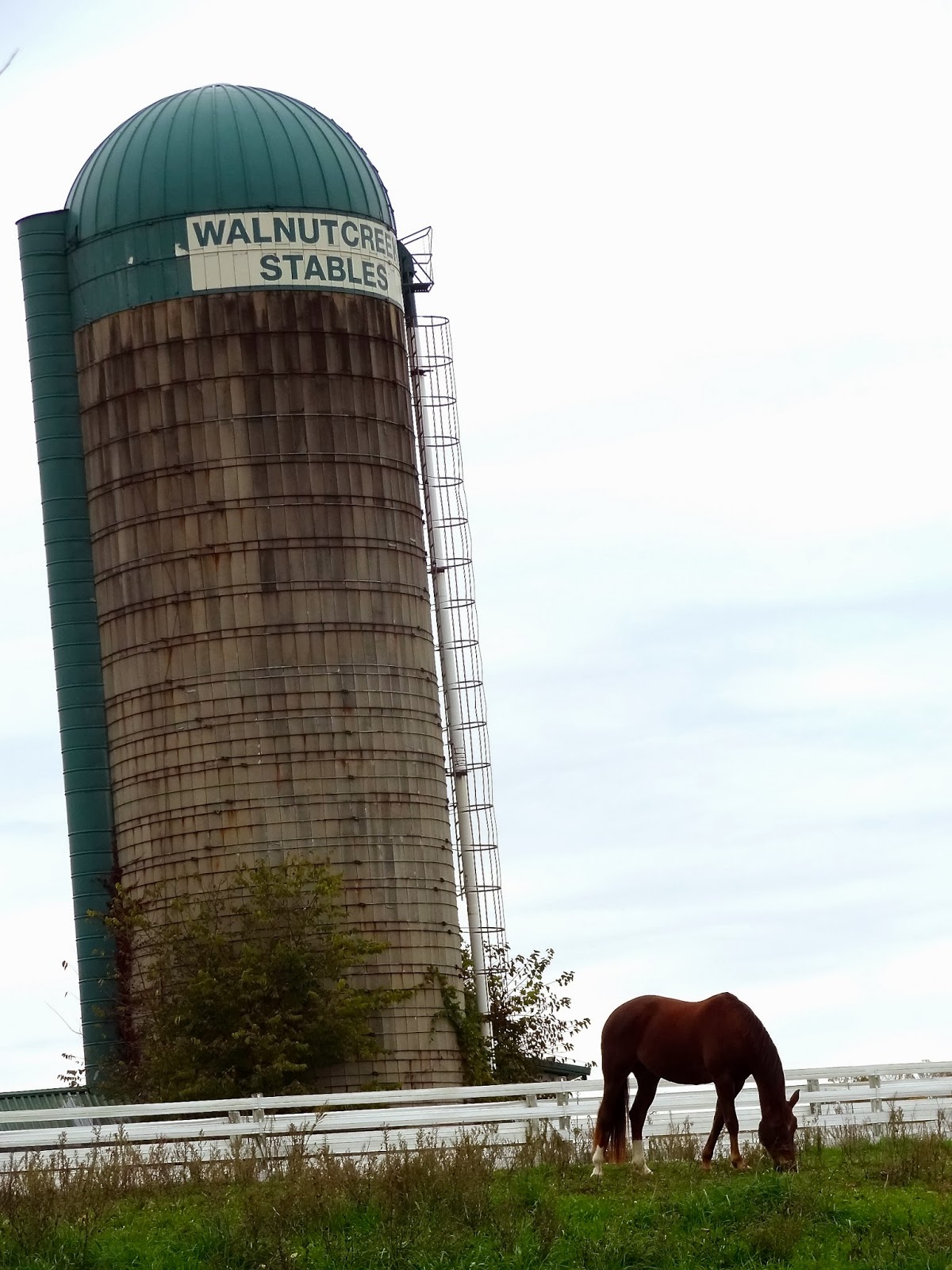
Any flashes of inspiration for you recently? Where did you "see" them?
_______________________

Wednesday, October 31, 2012

Photo-A-Day: October

"Potpourri--(n) a collection of dried flower petals, leaves, herbs, and spices that is used to scent the air; a mixture of miscellaneous things."

Photo courtesy of sxc.hu
Whimsy, beauty, reflection, anticipation. October offered all these things and more, represented in this month's photo-a-day project, a challenge I started--can it be true?--ten months ago. And what a mix of images unfolded from the month's beginning to the end--a potpourri of colors, textures, smells, and surprises. Each day offered something different including walks in the height of autumn, a photography exhibit, a stroll across a university campus, a book fair. New skills to learn, trips to plan, ideas to explore, words to write.  A hodepodge, assortment, collection, odds and ends, miscellany (synonyms for potpourri courtesy of askdefine ); "a combination of incongruous things" (Free Online Dictionary). In other words, random stuff--which is always good for the imagination. Where will it all end up? Who knows. A new story or two? One would hope.

What helped fill your potpourri bowl of experiences/inspiration this past month?

p.s.To those who will embark on Nanowrimo starting tomorrow (the annual "write a novel in a month" challenge), good luck! 
___________________________

Friday, November 4, 2011

Proclamation Inspiration


Hear ye! Hear ye! I found this posted the other day at B. Streetman's Vintage Kids' Books My Kid Loves. For the love of picture books--reading, writing, and sharing--and in the spirit of keeping the hands-on PB format alive, I pass it along. Thanks to those who drew up the original draft. A quick review of the authors listed reveals a gazillion of their books I want to get my hands on!

My favorite line? "Picture books look best when their covers face outward."

Happy weekend, everyone.
____________________
Sunday, August 21, 2011

Where Writing Begins

"I always tell my writing students
that every good piece of writing
begins with both a mystery
and a love story.

And that every single sentence
must be a poem.
And that economy
is the key to all good writing.

And that every character
has to have a secret."
                                                                       --Silas House

A new week beckons in which I hope to uncover secrets. What about you?

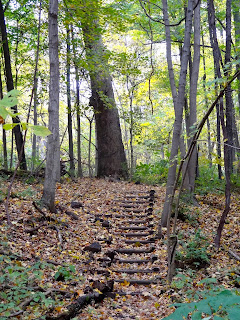
*photo courtesy of  sxc.hu/

Wednesday, January 5, 2011

Tap into Potential


"We spend January 1 walking through our lives, room by room, drawing up a list of work to be done, cracks to be patched. Maybe this year, to balance the list, we ought to walk through the rooms of our lives...not looking for flaws, but for potential."
                                             --Ellen Goodman

My word for the day--heck, let's make it this year's word, is potential. As in: n. a capacity to develop, succeed, or become something. We all have potential that is still being unlocked, tapped into. And so, to offer inspiration for those of us who want to take up the challenge to develop our potential--writing or otherwise--in the upcoming year, I share the following quotes:

"Continuous effort--not strength or intelligence--is the key to unlocking our potential." --Winston Churchill

"Focus on your potential instead of your limitations." --Alan Loy McGinnis

"One isn't necessarily born with courage, but with potential. Without courage, we cannot practice any other virtue with consistency. We can't be kind, true, merciful, generous, or honest." --Maya Angelou

"Joy comes from using your potential." --Will Schultz

"Each difficult moment has the potential to open my eyes and open my heart." --Myla Kabat-Zinn

May this be the year we tap into our potential with a deeper root than ever. And may we nourish the growth that will come with all the opportunities available to us.

- - - - - - - - - - - - - - - - - - - - - - - - - - - - - - - - - - - -

And thanks so much to Debbie over at Writing While the Rice Boils for guest posting my recent post on writing targets for the new year. Not only was I honored to have her reprint it, I take this opportunity to invite you to drop in at her place--she often offers great resources to help all of us in tapping into our potential. Thanks, Debbie!

Sunday, October 17, 2010

Moments of Inspiration

The past week, for me, was filled with the study of story, the writing of story, fall walks, camera shots--and inspirational moments that can come from a mix of it all. Here's a peek at what I gathered.

"An author must learn the principles of good storytelling only in order to write better from the heart." --Uri Shulevitz

"Imagination needs noodling--long, inefficient, happy idling, dawdling, and puttering." --Brenda Useland

"I think you must remember that a writer is a simple-minded person to begin with and go on that basis. He's not a great mind, he's not a great thinker, he's not a great philosopher, he's a story-teller." --Erskine Caldwell

"Moving around is good for creativity: the next line of dialogue that you desperately need may be waiting in the back of the refrigerator or half a mile along your favorite walk." --Will Shetterly

"Any work of art must first of all tell a story." --Robert Frost

"Imagination is more important than knowledge.
Knowledge is limited. Imagination encircles the world." --Albert Einstein

Wishing you beauty and inspiration in the week ahead...