Wednesday, October 31, 2012

Photo-A-Day: October

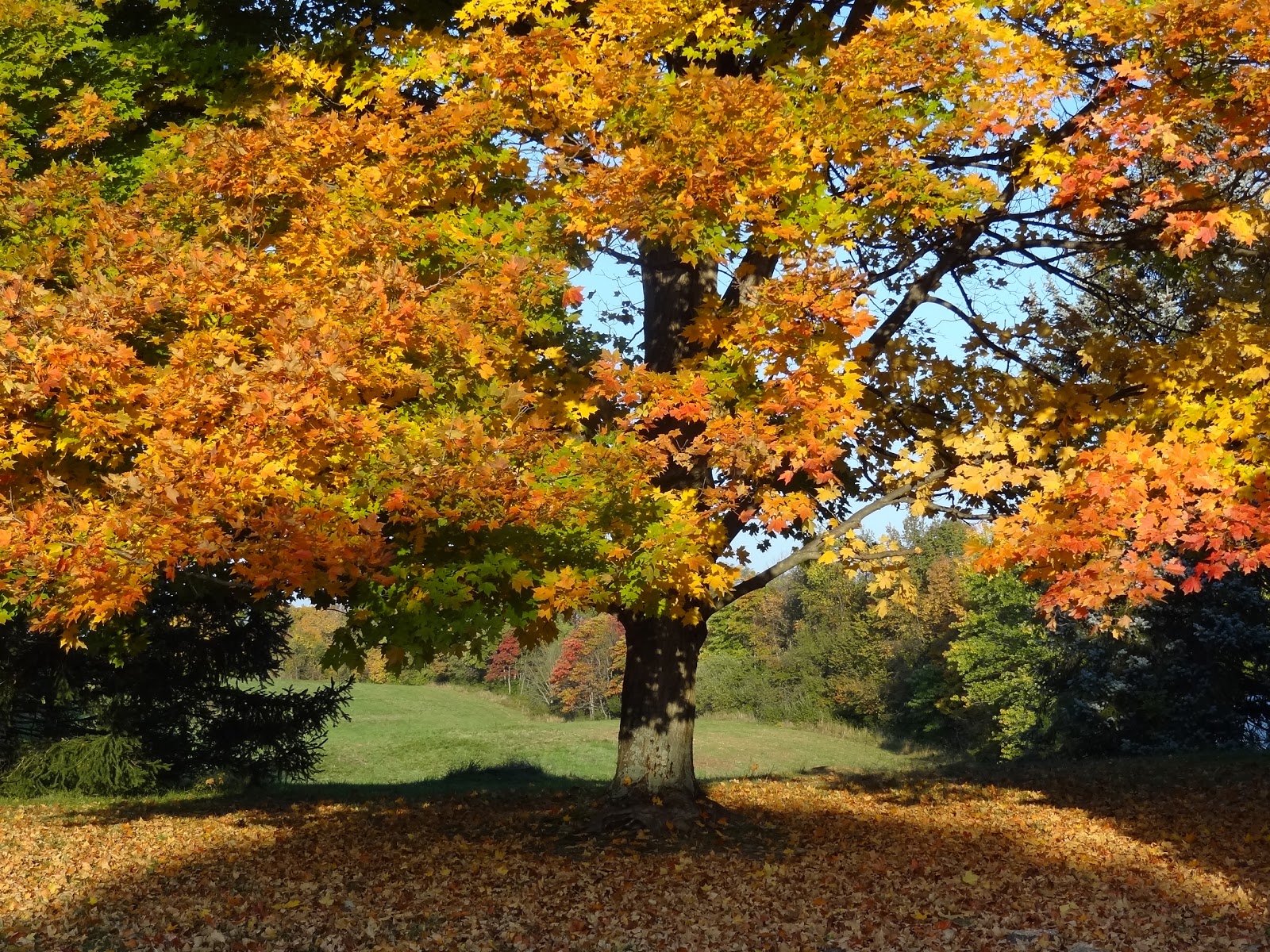
"Potpourri--(n) a collection of dried flower petals, leaves, herbs, and spices that is used to scent the air; a mixture of miscellaneous things."

Photo courtesy of sxc.hu
Whimsy, beauty, reflection, anticipation. October offered all these things and more, represented in this month's photo-a-day project, a challenge I started--can it be true?--ten months ago. And what a mix of images unfolded from the month's beginning to the end--a potpourri of colors, textures, smells, and surprises. Each day offered something different including walks in the height of autumn, a photography exhibit, a stroll across a university campus, a book fair. New skills to learn, trips to plan, ideas to explore, words to write.  A hodepodge, assortment, collection, odds and ends, miscellany (synonyms for potpourri courtesy of askdefine ); "a combination of incongruous things" (Free Online Dictionary). In other words, random stuff--which is always good for the imagination. Where will it all end up? Who knows. A new story or two? One would hope.

What helped fill your potpourri bowl of experiences/inspiration this past month?

p.s.To those who will embark on Nanowrimo starting tomorrow (the annual "write a novel in a month" challenge), good luck! 
___________________________

Thursday, October 25, 2012

5 Skills Writers Might Not Know They Possess

"The ability to relate and to connect, sometimes in odd and yet striking fashion, lies at the very heart of any creative use of the mind, no matter in what field or discipline." --George J. Seidel

photo courtesy of sxc.hu
My mom is a quilter. I'm a knitter. Neither of us are welders, electricians, or ditchdiggers. But there's a possibility that writers have similar skills to all of the above. How so? Consider five skills that writers might not know they possess.

Writers: 

1. Quilt. Quilters choose patterns to express their artistic endeavors. Writers seek patterns, too--in words, sentence structure, story flow, insight, and imagination. Bruce Ballenger, author of Discovering the Writer Within, notes: "First there is uncertainty and confusion, and then a pattern emerges that begins to make sense. First we plunge into the sea of experience and then tentatively climb the ziggurat of perception, reflecting on what we have seen, and plunge back in again with our new knowledge to see even more."

2. Knit. Knitters produce a knitted project much like a writer fills a blank page, one stitch/word at a time. Along the way both have to deal with the inevitable tangled threads: "Writing fiction has developed in me an abiding respect for the unknown in a human lifetime and a sense of where to look for the threads, how to follow, how to connect, find in the thick of the tangle what clear line persists." --Eudora Welty

3. Weld. Welders specialize in joining, linking, forging things together--especially metals, plastics, polymers. Writers join, link and forge, too--in their heads and through their keyboards. Marilyn Ferguson inspired this thought with her observations: "Making mental connections is our most crucial learning tool, the essence of human intelligence; to forge links; to go beyond the given; to see patterns, relationships, context."

4. Wire. What do electricians do? Make connections. So do writers. And we have to train ourselves--wire our brains--to see connections and follow them to their conclusions. Right-brain exercises designed to spark creativity help in this way, as does freewriting, journaling, and writing poetry. Dean Kamen reminds us: "Some broad themes brought me where I am today. At a very young age, my hobby became thinking and finding connections."

5. Excavate. Ah, this might be a stretch. I might fall into a hole here. But excavators are ditchdiggers and earth movers who uncover--reveal--that which lies beneath. Writers are word movers, seeking to uncover and reveal a story's meaning. Ballenger again: "Writers do that, moving back and forth between the seeming chaos of information collected and then reflecting on its significance, looking for connections, contradictions, questions, or even specific details...that will reveal meaning."

What's the value in learning all these skills--to be a jack-of-all trades, master of none? On the contrary, these skills help foster a long-term goal, that of enjoying what we do. One more time, Mr. Ballenger: "I find that moment of recognition--of making sense out of something that seemed to make no sense--is one of writing's greatest joys."

Do you find yourself doubting you can take on all five skills? See yourself mastering only one or two? Then consider this. "A typical neuron makes about ten thousand connections to neighboring neurons. Given the billions of neurons, this means there are as many connections in a single cubic centimeter of brain tissue as there are stars in the Milky Way galaxy." --David Eagleman

Wow. The brain power is there. All we have to do is tap into it. What other unusual skills do you think a writer possesses--or maybe should develop?
_____________________________

Friday, October 19, 2012

On Beauty, October-Style

as seen on an October walk 2012
"In every man's heart there is a secret nerve that answers to the 
vibration of beauty."--from "A Slice of Sunlight" by Christopher Morley, 1928

How's the autumn color in your neck of the woods?

Hope you're getting some great snapshots :-)
                                                             ________________________

Friday, October 12, 2012

The Gift of a Writer's Eye

Photo: sxc.hu
I came across the following story in an old Highlights Foundation publication squirreled away in my files from way back in 1996 and, I think, worthy of sharing. It's a quote from Patricia Broderick. It goes like this:

"...I submit to you that writers see differently. They see the everyday world differently than do others...This is a story from the Chicago Daily News:

I've heard of the problems newly retired men and their wives face when confronted by too much togetherness, and I was always amused at the way they so often get on with each other's nerves. I never thought I'd face such a problem, but it's been two months now and matters around here are pretty bad. I ran out of patience that first Monday. There we were, the two of us. Dave busied himself by following me around, inquiring into my household routines. I tried to be pleasant, but my surly nature surfaced when he asked, 'Why don't you vacuum all the way under the bed?'

I've tried to interest him in any number of activities with little success. I've even shouted the merits of daytime TV. 'What you really need is a job,' I told him, knowing he'd never be able to find one at his age. Yesterday was typical. Dave and I spent the morning together as always now. He sat looking out the window for a while, sighing intermittently. Then he came into the kitchen. 'What are we having for lunch?' he wanted to know. This was at 8:30. We went lockstep to the bedrooms, where he watched me make the beds. To his query, 'What should we do now?' I snarled, 'How about a duel with sabers?' A lengthy discussion followed of my system of sorting wash. I don't like to sort wash, much less talk about it. The situation is getting to me. You'd think someone with so much intelligence, someone I truly love, would not be so totally annoying when faced with a change in routine. Oh, well, my problem won't last forever. Next fall Dave will be in kindergarten.

"My wish for each of you is that you view the world with the gift of a writer's eye every day of your life."--Patricia Broderick

Have a great weekend! May we all nurture the gift of the writer's eye as we go...

p.s. Speaking of viewing the world with the gift of a writer's eye, here's a link to a great writing opportunity. Ladies' Home Journal is sponsoring a Personal Essay Contest (here), "Tell Us About The Day That Changed Your Life." They say, "Ladies' Home Journal is a community that shares stories--and we're dying to hear yours. For our second annual Personal Essay Contest, we want to hear about a memorable moment in your life--the day, or the hour, or the second that changed everything. We urge you to be poignant, reflective, funny. Make us howl with laughter. Make us blubber in our cubicles (we can take it!)." Top prize is $3000 and the chance to have your essay published in the Journal. Deadline: Dec. 7, 2012.

(Thanks to my friend Lanita who passed this along.)
___________________________________

Saturday, October 6, 2012

A Story's Roots

Photo: sxc.hu
"All of literature comes out of the family--Oedipus, Hamlet--even Genesis is a family story. Storytellers always revert to the family--the people we're born from and the people born to us. It's impossible to exhaust." --Irwin Shaw

I can think of a few families whose life's journey would make a good story, can you?

Do you agree that all of literature comes out of the family? Or might there be other story roots?

Just wonderin'...
_________________________

Sunday, September 30, 2012

Photo-A-Day: September

"There's something like a line of gold thread running through a man's words when he talks to his daughter, and gradually over the years it gets to be long enough for you to pick up in your hands and weave into a cloth that feels like love itself." --John Gregory Brown

Kenneth
Oct.15, 1922--Sept. 25, 2012
Words. We speak them. We write them. Sometimes we weave them like gold threads, and the resulting cloth is a very special thing. This happened at my father's funeral a few days ago.

His death was not unexpected, but a blow none-the-less. Tears mixed with all those things a family must attend to--packing for the trip, gathering photos for a memorial dvd, funeral arrangements themselves, calls and contacts, sorting through necessary forms, sleepless nights.

But then threads emerged. Offers to help. Food trays. Flowers. A hairdresser who wouldn't take payment for doing my  mom's hair. Reunions. Reconciliations. Hugs. Kindnesses. Comforts. Oh, and words.

People began to speak of my dad. Words of memories. Words of respect. Words of love. He endured tough times and the past few years were especially difficult. But those days are now in the past and what threads did people remember most? That he loved his family. That he and his faithful wife were married 66 years. That he could light up on even the worst days at the mention of his grandchildren and great-grandchildren. And that he warmly accepted those woven into the family by marriages of their own. Truly a cloth that felt like love itself.

Golden threads seemed to run through September's photo-a-day challenge as well, images of beauty, comfort, and specialness as this daughter kept her camera close once again for another month. Along the way she cherished good memories and held close to her heart words her father once spoke to her.

Here's a peek then at September's gallery...
____________________________________

Thursday, September 20, 2012

Expression, Expressiveness, and Good Writing Habits

"Expressiveness is the goal. Expression is what we use to get there." --Arthur Plotnik


I've come across another "favorite" book on writing to add to my list: Arthur Plotnik's The Elements of Expression, Putting Thoughts into Words. Are you familiar with it?

From Goodreads: "Whether the subject is love, mortality, or anything in between,putting your thoughts into words that demand attention isn't as easy as pouring water into a pitcher. That's where this book comes in. Written with humor and wit, it offers many engaging examples of adventuresome language that not only get you noticed, but also communicate a wide range of feelings, thoughts, meanings, and experiences vividly and forcefully."

So far I've only progressed through the first five chapters but already I'm hooked. A sample:

"Anyone who has seen Pygmalion or My Fair Lady knows how quickly expressiveness can flower when love and a wager come into play: On a bet, Professor Henry Higgins tutors a Cockney loudmouth named Eliza Doolittle in Snob Speech 101, and Eliza achieves enough courtly elegance to pass muster at a ball. If we ask no more than that of expressiveness, then the Higgins Method will suffice.

"Of course we do ask more, if we hope to engage distracted listeners and readers. And while small steps toward expressiveness yield quick rewards, the quick fix for mush-mouthed language doesn't exist...Instead the fix involves a number of long-term commitments worth keeping in mind:

Read--Listen--Savor--Keep a Journal.
Pause--Scan--Choose--Invent--Polish

"These are the acts to which expressive people must commit themselves. And if the word commit smacks of twelve-step recovery, think of these acts as acquired habits of highly expressive people."

Ah, long-term commitments. But with an eye toward more vivid, meaningful expressiveness? Worth it. And although the past week was a busy one over this way, I happily discovered upon reflection that I had  been able to continue fostering some of these habits. A short synopsis:

1. Read. Books I enjoyed included Killing Lincoln by Bill O'Reilly (great reading for those interested in all things Civil War), A Little Princess by Frances Hodgson Burnett (how did I miss this gem when Burnett's The Secret Garden is such a favorite classic on my shelf?! Sweet and endearing, a must-read), and the first few chapters of Ann Voskamp's One Thousand Gifts (which is proving to be a beautiful read).

2. Listen. Quite a few opportunities to "listen" presented themselves, including a college reunion around a chilly night's campfire (had a great time, Paula!), an Amish auction benefiting a county home, and a bit of time spent in a Greyhound bus station.

3. Savor. I love how Plotnik describes this: "When a delicious piece of expression comes their way, whether by written or spoken word, expressive people do not simply wolf it down. They chew on it to savor its essence, and thus make it theirs."

An example from my readings this week worthy of savoring includes this: "The English language has a million words, but only one for the two kinds of forgiveness. This is a major failure. The two kinds may be similar at the molecular level but they are far removed in magnitude. Like a candle flame and a volcano, an April shower and a hurricane, a soft tremor beneath your feet and the great San Francisco earthquake..." (Thomas Lake, 'The Boy They Couldn't Kill,' Sports Illustrated, Sept. 17, 2012.) Lake's story, which I recommend reading if you get the chance, is a powerful story of a horrendous tragedy, a grandmother's love, courage and determination--and forgiveness--and speaks for itself. But at the same time the writing is amazing, too.

4. Keep a Journal. I journaled about some of the events of the week. I wrote haiku. I made notes of phrases that struck me, bits of conversation that intrigued me, stories that others related. If we writers accomplish only one thing each day, it would be to journal our thoughts, impressions, and ideas--and with that foster the writing habit and keep the writing wheels oiled.

It turns out that a busy week yielded up valuable writing material--simply because of a commitment to think as a writer as I went. Thank you, Mr. Plotnik.

And that's only part of the book's premise. "Read, listen, savor, keep a journal--these are ongoing habits of expressive people," Mr. Plotnik writes. "The next five apply during acts of expression."

Oooh, there's so much more ahead in this book. I'll keep on reading, digesting, and (hopefully) applying. How about you? What writing book has impacted your writing, writing habits, expression and expressiveness? Are you able to read, listen, savor and journal consistently most of the time, or not?
_____________________________