Showing posts with label poetry. Show all posts

Friday, July 31, 2020

Poesy vs. Posy

dayflower July 2020
Poesy (n)--poetical works, poetry, the work or the art of poetic composition (archaic); from Latin poesis, to create

Posy (n)--a flower or a bunch of flowers, a bouquet or nosegay

Poesy vs. posy. The words are similar in pronunciation. The values assigned to each have similar characteristics--beauty, wonder, creativity. I discovered this little marvel of a posy along the roadside on a recent walk, the dayflower. So named because it blooms for only one day. How timely I came along just on that day. As Keats says, poesy should be a friend to soothe the cares and lift thoughts. Stumbling on a chance wildflower is like a friend as well. This posy in particular makes me think of a skier with her legs extended out of the ski lift high above the mountain!

Random and serendipitous flowers and sometimes poetry, too. Have you stumbled unexpectedly upon either one that has lifted your thoughts lately?
____________________________________

Monday, August 21, 2017

A Poetry Day, In Pictures

What a day made for poetry! An historic solar eclipse first of all--itself an amazing phenomenon. Though only a partial in our neck of the woods, we still felt its impact. But prior to that was a morning walk in which roadside flowers put on their own stylish display, albeit less dramatic. It's as if I'd been invited to one of Nature's poetry readings, filled with resonance, heart-lifts, smiles...

Although I have no personal snapshots of the eclipse, here are samples from my 'poetry' walk among the flowers (with quotes): 

"The poet doesn't invent. He listens." 
--Jean Cocteau, French writer (1889-1963)

"The poetry of earth is never dead." 
--John Keats, English poet (1795-1821)

"Poetry is the language of surprises." 
--Steven Taylor Goldsberry, The Writer's Book of Wisdom

"It is the job of poetry to clean up our world-clogged reality by creating silences around things." 
--Steven Mallarme, French poet (1842-1898)

"Poetry is not always words." 
--Terri Guillemets, quotations collector and founder of The Quote Garden

"Poetry begins in delight and ends in wisdom." 
--Robert Frost, American poet (1874-1963)

Poetry: a moment, a tug, an echo, an awakening. An experience, a discovery, a dance, a flight. A glimpse, a hint, a mystery, hope. 

poetry speaks in
heartprints but like fingerprints
no two are alike
                                    --Kenda Turner

Have any poetic moments spoken to you lately?
_________________________________

Tuesday, April 19, 2016

Haiku A to Z: P is for Punctuation

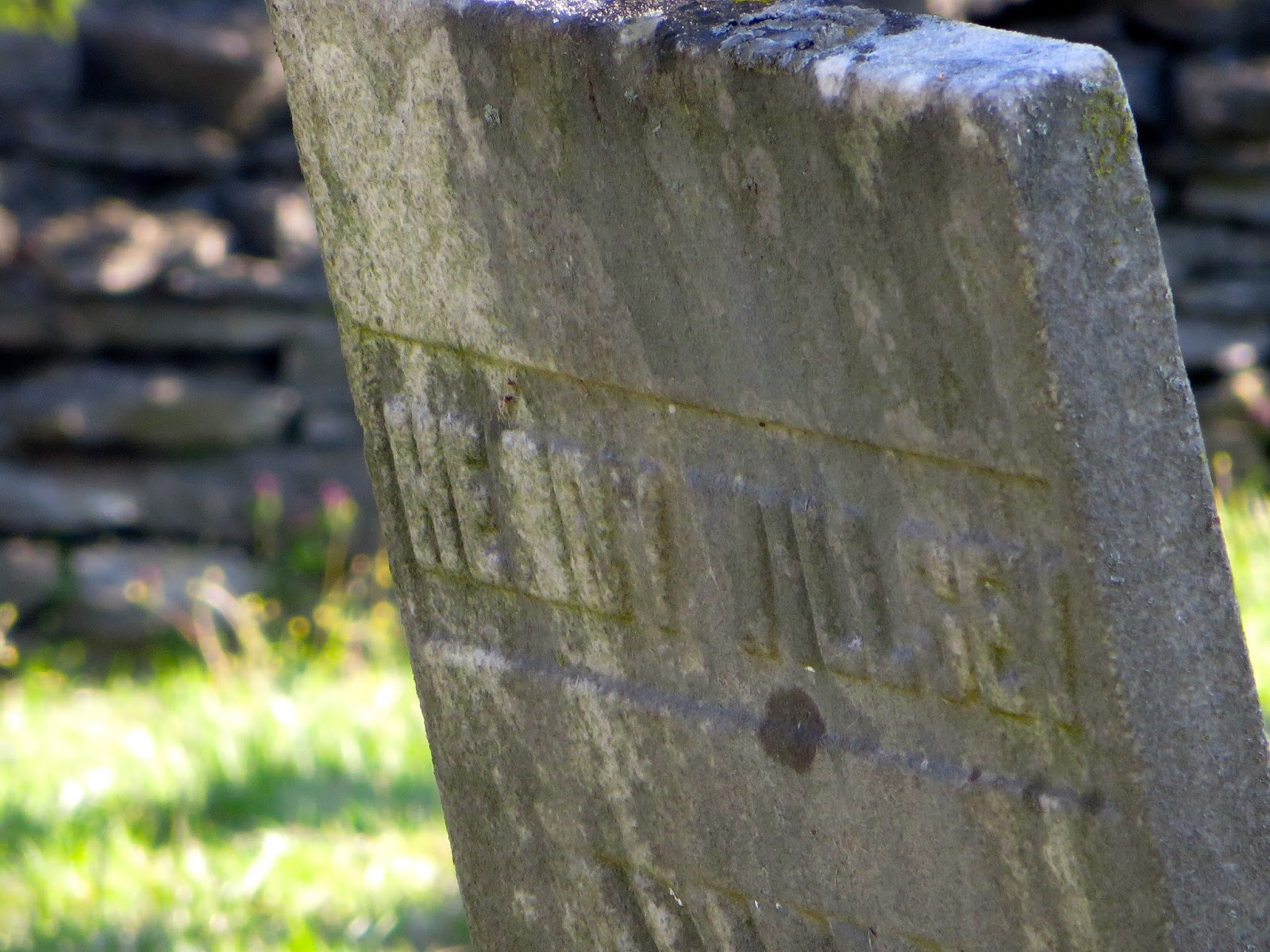
local pioneer cemetery 2016

"(On) Too Much Punctuation: Avoid periods. A haiku is one moment in a continuum: a period often destroys that illusion (so may beginning with a capital letter). Other punctuation: The average haiku has one break in thought or continuity, usually at the end of line 1 or 2 (sometimes, the middle of line 2). If punctuated at all, it is usually with a colon, dash or ellipsis. An occasional dash or ellipsis may provide emphasis either before or after the final word (or phrase). In general, shy away from punctuation unless you are sure of its benefit." --Larry Gross, Japanese Poetry Patterns

The appropriate use (or not) of punctuation is an important consideration in the pursuit of writing haiku, as Mr. Gross explains above. Thus punctuation plays in the particulars. But I've found other -P- words that play into the process as well. My short list includes:

Ponder (nurture a sense of wonder and curiosity)... Practice (no, the final version does not come automatically in the first draft)... Permission (to write bad poetry on the way to good)... Patience (there are positives in the journey even if the end goal is elusive)...

And don't forget portable--it's poetry you can easily take with you!

Still pursuing the elusive haiku, so here we go--presenting Day Sixteen Haiku:

wildflower clusters
decorate pioneer graves...
bluebird comes singing
--Kenda Turner
___________________________

Saturday, April 16, 2016

Haiku A to Z: N is for Nature--and Next

photo courtesy google images
"Haiku is a poetry of nature, but it is also a poetry of human nature. Haiku gives readers feelings, and shows human existence amid nature. Not all haiku is about beauty, but they are always about what is real... On reading a good haiku, we are mentally and emotionally moved to experience what the poet experienced, yet we do so without being told what to feel." --Michael Dylan Welch, Haiku and the Japanese Garden

Haiku--the poetry of nature and also of human nature. I'm still noodling with the concept and form. What's next?

Well, neat books on haiku I'd love to read for one thing. Some titles I've come across that sound interesting:

To Walk in Seasons: an Introduction to Haiku, by William Howard Cohen
Haiku Mind: 108 Poems to Cultivate Awareness and Open Your Heart, by Patricia Donegan
Writing and Enjoying Haiku: A Hands-On Guide, by Jane Reichhold

There's also a little something called NaHaiWriMo: National Haiku Writing Month. The challenge here is to write one haiku a day in the month of February. This, of course, is not to be mistaken for NaNoWriMo (National Novel Writing Month) held each November. Will I participate in one of these events next?  Though not on the radar screen at the moment, never say never.

And, lest we forget, April is National Poetry Month!

It was one of those aha moments the day the squirrel and I faced off. Though I cannot take credit for the photo above, the expression I saw on my neighborhood squirrel was similar, which then brings us to my day fourteen haiku:

nearby squirrel sneaks
peek from hole, surprise lights face...
that makes two of us
--Kenda Turner
__________________________

Saturday, April 9, 2016

Haiku A to Z: H is for History in Haiku

photo courtesy of pixabay
"'If you wanted to, you could write history in Haiku.' I'd been saying this for some years when one semester, one bright student said, 'Well, Professor Brands, have you ever written history in haiku?'"--H.W. Brands, author and history professor

 Talk about picking up a challenge and running with it. H.W. Brands, author of over 25 books and professor at the University of Texas started tweeting the history of America in haiku in 2009, and is still at it today. In an interview with PBS News Hour he said, "I've observed that the forms available to writers have changed over time and I thought one of the most radical changes was Twitter, the idea that you would send this message in 140 characters. It occurred to me that the 17 syllables in a haiku fit conveniently in 140 characters of twitter." He began his project at 15,000 B.C. with the first peopling of the Americas. To date he's up to the first moon landing.

Now that's a highly innovative use of haiku!

I often visited a dear neighbor who lived into her nineties, and she would share stories of growing up in pre-war Germany. One of her accounts prompted my history in haiku, day eight:

happy German kids
bike into Holland, nineteen-
thirties' innocence
--Kenda Turner
____________________________

Friday, April 8, 2016

Haiku A to Z: G is for Goals and Groups

on walk 2015
"Your goal (in haiku) is to paint a picture in the mind of your reader." --nursery-rhymes-fun

Oh, to paint a picture with words. Certainly that is the goal of all writing, but for haiku the goal carries its own set of challenges. You're writing a snippet, an impression, a glimpse--and in so few lines, words, syllables. But you're not alone! There are groups and gatherings with a passion for haiku around the world. One source (here) shows active groups throughout Europe, in New Zealand, Bangladesh, Croatia, and Sweden--as well as the home of haiku, Japan. You can also find haiku groups on Facebook and Twitter.  The haiku writer never needs to feel isolated. Websites are dedicated to haiku, as well as magazines, submission opportunities, and contests.

Speaking of contests, how about a haiku contest in honor of National Grammar Day? Ha, I didn't even know there was such a thing as a national grammar day (March 4 each year). And to celebrate, the American Copy Editors Society holds a yearly haiku contest on Twitter. Submissions are not in your traditional form, but great fun. Have you ever tried to write a haiku about a verb or about sentence fragments? Check out the 2016 winners at Grammar Girl's Winning Haiku.

So here we are, going forward with Day Seven Haiku:

goldfinches this morn
chirp joy tunes from fence row seats
sunny symphony
--Kenda Turner
_____________________________

Thursday, April 7, 2016

Haiku A to Z: F is for Feeling

backyard discovery 2014
"Does your poem give readers a feeling? It can do this by presenting what caused your feeling rather than the feeling itself. So others can feel what you felt, don't explain or judge what you describe." --Michael Dylan Welch, Haiku Checklist

Haiku is a great medium for sharing the feeling of a moment. A moment is just that, a moment--fast, fleeting, fading. You don't have time to explain. You don't want to explain. You simply want to invite the reader into a fresh, flowing moment--with freedom to feel it their way.

A hard concept to capture, but worth trying. That's where the fun comes in!

Having fun with my Day Six Haiku:

flickering sunlight
partners with trees--dance breaks out
in silver shadows
--Kenda Turner
_________________________

Wednesday, April 6, 2016

Haiku A to Z: E is for Essence

on road home 2015
"The essence of haiku is the way it describes natural phenomena in the fewest number of words, making an indelible impression on the reader." --Bruce Lansky

The word essence, from the Latin essentia (esse to be) has a number of different meanings, depending on how the word is used:
1. "the basic, real, and invariable nature of a thing"
2. "a substance obtained from a plant, drug or the like, by distillation, infusion, etc. and containing its characteristic properties in concentrated form"
3. "an alcoholic solution of an essential oil, spirit"
4. "a perfume, scent"
5. "something that exists, especially a spiritual or immaterial entity" (source: dictionary.com) 

I suggest that the "essence" of haiku takes on each of these meanings in its own way. Yes, the essence of haiku, as in Lansky's definition above, is in the way it describes natural phenomena in the fewest number of words, hence: definition #1, the basic nature of the thing.

Haiku is also a distillation (definition #2): the poet's thoughts distilled into an image or a moment and containing properties of observation in concentrated form.

Haiku, though not alcoholic (but maybe addictive?) and not liquid, also consists of essential oils (definition #3)--or, in this case, we might say 'qualities.' These might include, but are not limited to, a quietness, calmness, insight, or surprising lift.

Haiku, because of its emphasis on engaging the five senses, often carries a mental "perfume," especially when a reference calls to mind an association to a seasonal scent (definition #4).

And haiku, in its existence (definition #5), often speaks of spiritual things, hence it can be said to contain 'heart'--a spiritual entity.

Essence: nature, substance distilled, spirit, scent, heart. Who would have thought haiku could take us to all of these places. At the same time it can be said that the essence of haiku can be elusive--the poet has her work cut out for her.

Of course, none of this discussion touches on other e-words of the day: experience, emotion, editing, experimentation, exercise, engagement of the right side of the brain, encapsulating the feeling of a scene, evoking. So many things to touch on, so little time!

All of this being said, I extend to you my Day Five Haiku:

evening clouds sweep the
sky and cool daytime's fire...
ashes bank embers
--Kenda Turner
____________________________

Tuesday, April 5, 2016

Haiku A to Z: D is for Differing Opinions, Debate, Discovery

morning moment 2015
"There are understandably differing opinions about the 'proper' way to write these wonderful poetic forms. Those traditionalists who think that retaining the classic Japanese style is most important are totally committed to their stance. Contemporary liberals who believe that adaptations are appropriate are equally as dogmatic in their opinions. Who's right? I feel the answer lies completely and subjectively within the mind of the writer...or perhaps the reader... doesn't it?" --Nancy Ness

I appreciate the debate about haiku...

Nancy Ness (All About Haiku, here) expands on the thought:
          "The appeal of these seemingly simple verses undoubtedly stems from their unique messages that deliver succinct words of wisdom to their readers. A well-written Haiku will incorporate two criteria. It will impart a universal sentiment that relates to all of humanity--in 17 'onji' (Japanese equivalent of syllables) or less--and it will allude thematically in some way to nature...Modern day Western versions of Haiku differ somewhat from the original classic format. The ultimate "English Haiku" challenge is to write effective verse in fewer syllables than the standard 17. 
          "The Western writer must make a choice. If she/he opts to conform to the rigid structure of form, then a 17-syllable Haiku will adhere to the Japanese onji format. If one prefers to adapt to the doctrine of brevity, an abbreviated version of genre is choice..."

Lee Wardlaw (Eight Things I Learned From My Cats About Haiku, here) says:
          "Japanese haiku feature a total of seventeen beats or sound units: five in the first line, seven in the second, five again in the third. This 5-7-5 form doesn't apply to American haiku, however, because of the differences in English phonics, vocabulary, grammar and syntax. Forcing an unnecessary adjective or adverb into a haiku simply to meet the 17-beats rule can ruin the flow, brevity and meaning of your poem. So feel free to experiment with any pattern you prefer (i.e. 2-3-2, 5-6-4, 4-7-3)--provided the structure remains two short lines separated by a longer one. Remember: what's most important here is not syllables but the essence of a chosen moment."

Recognizing there are differing opinions on haiku patterns, I still lean toward the traditional form, but who knows? After all, discovery (not dogmatism) is what writing's all about, isn't it?

On the discovery journey with Day Four Haiku:
dawn switches on stage 
lights--windblown trees bow to the
opening curtain
--Kenda Turner
_________________________

Monday, April 4, 2016

Haiku A to Z: C is for Capture


moment in time 2012
"Haiku captures a moment in time, revealing a surprise or evoking a response of aha! or ahhh. This pounce helps the reader awaken and experience the ordinary in an extraordinary way." --Lee Wardlaw

"Captures a moment in time": this is one aspect of haiku that draws me to the form. Catching a moment, an image, in words that in turn offers an invitation to linger over and savor the moment again. Wardlaw says it is to experience the ordinary in an extraordinary way. It's also seeing something seemingly common in an uncommon way, to make a forgettable moment an indelible one, to slow a hectic pace to a pause that encourages wonder.

I didn't realize this when I first started writing haiku. I thought I was simply adhering to a pattern of syllables. Boy, was I wrong. There's a whole world out there that haiku invites one into. I'm captivated!

And so I offer my Day Three Haiku:
cardinal swoops in
to paint red feather strokes on
evergreen canvas
--Kenda Turner
____________________________

Sunday, January 31, 2016

Magic of Poetry, and Writer-In-Residence

Cincinnati's Library, downtown location, 2016
"Poetry is an art that exceeds any kind of pinning down. You can't do it. How do you teach that? It's challenging. It's an art form that's wide open but magical." --Jeffrey Hillard

Magical. I hadn't thought of the word in relation to writing poetry before, but once the word was voiced, I knew it was true. Of course the same could be said of any writing since you don't know starting out what surprises will come with the ending, but I think it's especially true with poetry.

The epiphany came over the weekend when hubby and I ventured downtown to Cincinnati's main library to hear Library Foundation Writer-in-Residence Jeffrey Hillard speak. Mr. Hillard is a gifted poet, novelist, editor, and college professor, and author of four books (with three more scheduled for upcoming releases). He is also a great advocate for local and regional writers.

What a great way to spend an hour. Could have spent a couple more!

Highlights of Mr. Hillard's insights:

 1. "Poetry is an extremely experimental enterprise." (Translation? Don't worry about the right and wrong of writing poetry, just try your hand--and heart--at it.)

 2. "Don't wait for a poem, go to it."

 3. "The first line is most important. It produces a kind of jumping off point." 

 4. "Three important things to kick around when writing a poem: imagery, sounds, shape."

 5. "A poem will go through a myriad of changes. Think of the process as 're-entering' a poem, not revision."

 6. "Re-enter and try to shape differently than what it currently is--extend lines, shorten lines. Don't be afraid to tinker with it."

 7. "Step back, go back, give it a day. Later it might scream to go a little further."

 8. "Experiment. This empowers the next draft with more energy or insight. Find out what the poem wants, not what you want."

 9. "Ask yourself, is there a part two? Maybe more lines or maybe the poem actually starts in the middle of the last draft?"

10. "How can do you know a poem is done? You really can't know. Take the version you like."

Oh, my. There's more freedom in poetry than I ever realized. It is...well...a wide-open, magical art! I think I'm going to dabble in it a little more this year.

Along with that, I'm going to check out some of the books Mr. Hillard recommends, including:

The Poet's Companion: A Guide to the Pleasures of Writing Poetry (Laux and Addonizio)
A Poetry Handbook (Mary Oliver)
In the Palm of Your Hand: The Poet's Portable Workshop (Steve Kowit)
A Note Slipped Under the Door: Teaching from Poems We Love (Nick Flynn)
Creating Poetry (John Drury)
The Art of Syntax: Rhythm of Thought, Rhythm of Song (Ellen Bryant Voigt)
Best Words, Best Order: Essays on Poetry (Stephen Dobyns)
The Art of Description: World into Word (Mark Doty)
The Poem's Heartbeat: A Manual of Prosody (Alfred Corn)
Proofs and Theories: Essays on Poetry (Louise Gluck)

How does the upcoming year look for you? Any new writing adventures waiting to be tackled? Any epiphanies in setting goals? Is there poetry in your cards? Are you looking for a little magic?

(Interested in hearing Mr. Hillard yourself? Check out his interview with crime novelist Trace Conger, podcasted here.)
________________________ 

Tuesday, December 1, 2015

Words and Music, Take 2: Elizabeth Barrett Browning and More

photo courtesy google images

"Books, books, books!
I had found the secret of a garret room
Piled high with cases in my father's name;
Piled high, packed large,--where, creeping in and out
Among the giant fossils of my past,
Like some small nimble mouse between the ribs
Of a mastadon, I nibbled here and there..."

My, oh, my, where did November go? Much activity and a number of details consumed the days, and before I could blink, the month was gone. However, like the poet Elizabeth Barrett Browning, I nibbled here and there in books. Not only that, secrets were uncovered--though credit goes not to a garret room but to the marvel that we now know as a Google search.

In my last post, Words and Music, I featured an anonymous quote that starts with the line, "Words are instruments of music..." I found it in an old book copyrighted 1947, and was intrigued by the metaphor. Though I tried to find its source, I had no luck. Oh, well, I tried. And that was that.

Or so I thought.

Theodore Tilton
Imagine my surprise when a friend found the source and sent me a link to it. Obviously his research skills are more developed than mine! The words were written by one Theodore Tilton, an American newspaper editor and poet, and are found in his book from 1870, Sanctum Sanctorum, Proof Sheets from an Editor's Desk. In the chapter "Elizabeth Barrett Browning" (p. 51), Tilton wrote: "She knew the true art of choosing words...Words are instruments of music; an ignorant man uses them for jargon, but when a master touches them they have unexpected life and soul. Some words sound out like drums; some breathe memories sweet as flutes; some call like a clarinet; some shout a charge like trumpets; some are sweet as children's talk, and others rich as a mother's answering back. The words which have universal power are those that have been keyed and chorded in the great orchestral chamber of the human heart. Some words touch as many notes at a stroke as when an organist strikes ten fingers upon a keyboard...No finer instance of this skill is found in the whole realm of good English, out of Shakespeare, than in the writings of Mrs. Browning, particularly in those who which pay homage to the affections."

Whoa. Mr. Tilton held Mrs. Browning's writings in high esteem for sure. But more than that was the thrill of discovery all these years later. A mid-20th century writer couldn't find the source for a quote written in the 19th century, but by the 21st century, there it is!

source: About the Brownings
Of course there is so much history in all of this, as is often the case. Reading more about Elizabeth opened up a whole new area of study, and I nibbled Google's smorgasbord about her--things like how she married Robert Browning, another beloved poet of the time, when she was 40 after being an invalid and recluse for a number of years. She was six years older than he. Three years later she gave birth to their only child, a son they nicknamed Pen. A beloved poet, she wrote on a variety of social injustices, including Italy's fight for independence, women's issues, child labor, and slavery. Much of her work reflected her Christian faith. And Tilton, too, has a history himself (here) that included his passion for the game of chess. So much information out there, one can get lost...

Maybe I identify more with Ms. Browning than I realize--a mouse nibbling between the ribs of a mastadon-size wealth of information known as the internet. But December is here, and I'm thinking it's time to get out of the garret and back to the writing desk.

How about you, any subjects you've feasted on lately?

*********
More quotes from Elizabeth Barrett Browning:

"The little cares that fretted me,
I lost them yesterday
Among the fields above the sea,
Among the winds at play." 

"With stammering lips and insufficient sound I strive and struggle to deliver right the music of my nature."

"Earth's crammed with heaven...
But only he who sees, takes off his shoes."

"Light tomorrow with today."
____________________________________

Wednesday, May 27, 2015

Sailors in the Vineyard, and a Wedding


Dreamland
by Silas Weir Mitchell

Up anchor! Up anchor!
Set sail and away!
The ventures of dreamland:
Are thine for a day.
Yo, heave ho!
Aloft and alow
Elf sailors are singing,
Yo, heave ho!
The breeze that is blowing 
So sturdily strong
Shall fill up thy sail
With the breath of a song...

We had a wedding over Memorial Day weekend and the launching site was beautiful.

The ventures of dreamland...
The celebration was held in a vineyard.

...are thine for a day
Guests witnessed the couple's vows.

Elf sailors are singing, yo, heave ho!
A host of attendants accompanied them--including great-grandchildren of the bride 
and great-nieces and nephews of the groom. Each one wore a sailor outfit. 
(The ones in the front are four of our five grandkids.)

The breeze that is blowing so sturdily strong...
Photo ops and toasts, sunshine and breezy blessings abounded.

...shall fill up thy sail with the breath of a song.
And many opportunities to savor the moment. What a memorable day!

And the poem Dreamland? It was written by one Silas Weir Mitchell in 1890. Mitchell (1829-1914) was a physician during the Civil War specializing in neurological diseases. He later embarked on a serious literary career at age 50, writing poetry and novels. Quite the varied careers, I'd say! And, interestingly enough, his namesake and descendent all these years later, Silas Weir Mitchell, is an actor, best known for his role in the television series Grimm (which, I confess, I've never watched). Wow, the history that flows through one simple poem.

Dreamland continues for several more stanzas and can be found here. But the concluding lines are:

Then up with the anchor!
Set sail and away!
The ventures of loveland
Are thine for a day.

Quite appropriate for the newlyweds, not only on the day of their wedding, but for the fact that they live in...Loveland, Ohio!

Oh, the coincidences.

The excitement is behind us now and word counts beckon. I'm setting my sails back in that direction. In what direction will you aim your sails in the days ahead?
_________________________________________

Sunday, October 20, 2013

A Poem, A Poet, and Gold Dust

view from my porch room
on a beautiful October day 
                           "Days"
              by Karle Wilson Baker

Some days my thoughts are just cocoons--
      all cold, and 
            dull, and blind,
They hang from dripping branches in the gray 
      woods of my 
            mind;

And other days they drift and shine--
       such free and flying 
            things!
I find the gold-dust in my hair, 
       left by their brushing 
            wings.

I found this poem in an old book on the shelf, One Thousand Beautiful Things (copyright 1947 :-) and thought of my friend Peggy who often drops in and encourages me with her comments. But when I posted about the hummingbird, Peggy answered with "I feel a lot like a hummingbird--beating frantically just to stay in place." When I posted about the praying mantis and asked what insect readers might draw parallels from, Peggy responded, "The worker bee--buzzing around, working like crazy, never having time to smell the roses."

And I felt the frustration behind the words. Feel it in my own writing world sometimes. Know it's in many lives. So, I post this poem to say, let's spread some gold dust around! Here's a sprinkle for you, Peggy, with hopes that the upcoming week slows down a bit so you can do some of those things you really want to do--filled with thoughts that are free and flying.

Oh, and by-the-way, who's Karle Wilson Baker anyway? I wondered about that, too, since I had never heard of her before. That's right--Karle Wilson Baker was a woman as I found out in my research. She lived from 1878-1960 and became well-known in the early 20th century as a noted poet from Nacogdoches, Texas. I immediately felt an affinity to Karle, the poet with the unusual name (for a girl) and also for the fact that I once enrolled in a novel-writing course and my instructor was from...Nacogdoches, Texas!

"Poetry came naturally to her," according to Sarah Jackson in an on-line biography (here). Her poetic styles included the lyric, sonnet, narrative, and ode. Jackson also writes that she had "a strong sense of imagery and of figures of speech, especially metaphor."

In Karle's own words in a diary entry dated 1917, she wrote: "Writing my poems is seldom more laborious than skimming the cream from my thoughts. It just needs time and quiet to rise."

Oooh, if it were only that easy, right? Well, although we might envy such a talented poet, Jackson reports that while poetry came easy, Karle's attempts at fiction did not. So she had her frustrating writing days, too!

Maybe those were the days when a girl named Karle wished that gold-dust fell from the sky, too?

Are you having cold, cocoon-thought days lately, or flying-thought days when you wear gold-dust in your hair?
________________________________

Saturday, March 30, 2013

Daffodils, Wordsworth, and Writing


"And then my heart with pleasure fills,
And dances with the daffodils." --William Wordsworth

Our daffodils bloomed this last week and soon after another March snow fell. I thought the poor blossoms were done for. And yet today temperatures rose, the sun shone brightly, and the daffodils perked up. There's hope for them after all!

In the same week, I came across a poem written by William Wordsworth in which daffodils are featured (published in An Introduction to Poetry, by X.J. Kennedy):

I Wandered Lonely as a Cloud

I wandered lonely as a cloud
That flats on high o'er vales and hills,
When all at once I saw a crowd,
A host, of golden daffodils,
Beside the lake, beneath the trees,
Fluttering and dancing in the breeze.

Continuous as the stars that shine
And twinkle on the milky way,
They stretched in never-ending line
Along the margin of a bay:
Ten thousand saw I at a glance,
Tossing their heads in sprightly dance.

The waves beside them danced; but they
out-did the sparkling waves in glee;
A poet could not but be gay,
In such a jocund company;
I gazed--and gazed--but little thought
What wealth the show to me had brought:

For oft, when on my couch I lie
In vacant or in pensive mood,
They flash upon that inward eye
Which is the bliss of solitude;
And then my heart with pleasure fills,
And dances with the daffodils.

A lovely poem in its own right, by a noted and enduring poet (don't you just love the name Words-worth?), but it was the author's discussion on the way the poem came about that interested me most. Some highlights:

"In a celebrated definition, Wordsworth called poetry 'the spontaneous overflow of powerful feelings...recollected in tranquility.' Although in this poem Wordsworth's emotions may have overflowed spontaneously, they were captured on paper only by an expense of effort over a period of years...

"Between the first printing of the poem in 1807 and the version of 1815 given here, Wordsworth made several deliberate improvements. He changed dancing to golden in line 4, Along to Beside in line 5, Ten thousand to Fluttering and in line 6, laughing to jocund in line 16, and added a whole stanza (the second)...

(also) "...It is likely that the experience of daffodil-watching was not entirely his to begin with, but was derived in part from the recollections his sister Dorothy Wordsworth had set down in her journal of April 15, 1802, two years earlier: '...When we were in the woods beyond Gowbarrow Park we saw a few daffodils close to the water-side...as we went along there were more and yet more; and at last, under the boughs of the trees, we saw that there was a long belt of them along the shore, about the breadth of a country turnpike road. I never saw daffodils so beautiful...some rested their heads upon these stones as on a pillow for weariness; and the rest tossed and reeled and danced, and seemed as if they verily laughed with the wind...they looked so gay, ever glancing, ever changing...'

"Notice that Wordsworth's poem echoes a few of his sister's very words. Weaving poetry out of their mutual memories, Wordsworth has offered the experience as if altogether his own...(not that he) is a plagiarist but that, like any other good poet, he has transformed ordinary life into art.

"A necessary process of interpreting, shaping, and ordering had to intervene between the experience of looking at daffodils and the finished poem."

Whew. Insights for writers abound in this discussion. Did you notice:

1. Though a lot of writing is spontaneous, it also takes time to make it shine, sometimes years.

2. Revision is key to the best version you can muster.

3. Writers are open to inspiration from a wide-range of sources, often from those closest to us.

4. Writing is the craft of weaving ideas into our own words, transforming ordinary life into art.

5. Between the initial idea and the finished piece, a writer interprets, shapes and orders those things she's writing about. 

I love how all of this came together, inspired by a cheery little daffodil. What has inspired your writing recently?
_____________________________

Wednesday, August 8, 2012

8 Ways Haiku Helps Fiction Writers

(photo courtesy of sxc.hu)
An old silent pond...
A frog jumps into the pond,
splash! Silence again. 
--Matsuo Basho, translated by Harry Behn

Have you ever tried your hand at haiku, the poetic form of three lines and (traditionally) seventeen syllables? If not, would you? Particularly if you are a fiction writer and don't consider yourself a poet (like me)? Well, I for one have reconsidered...

First a definition:

"Haiku--an unrhymed verse form of Japanese origin having three lines containing usually five, seven, and five syllables respectively; also: a poem in this form usually having a seasonal reference."--merriam-webster

Secondly, observations on its form:

"Originally a Japanese poem of seventeen syllables in three lines, a haiku juxtaposes seemingly unrelated observations in order to glimpse the hidden connections between things."--John Drury, Creating Poetry

"Technically, a haiku must refer to a season...But for Western poets, the distinction may not be so useful or important. We normally call a haiku any three-line poem, give or take a line, that couples insights or images together in a flash." --John Drury

"Haiku are based on the five senses. They are about things you can experience, not your interpretation or analysis of those things. To do this effectively, it is good to rely on sensory description..." --Wikihow

"Although traditional haiku are often about nature or the changing seasons, they nonetheless manage to convey emotion." --Bruce Lansky

"Haiku teaches the power of observation and the importance of editing. You know you've done a good job of editing when the version with the fewest words makes the strongest impression." --Bruce Lansky

"Haiku will keep you working with words, but it will also help you deal with your stress. And here's the best part: You don't have to wrestle with rhyme!" --Diane Mayr ("Too Busy to Write? Keep in Shape with Rhymes, Limericks and Haiku," The Writer Magazine, October 2002)

So with all this in mind, how might haiku help a fiction writer? Taking from the above quotes and adding a couple of my own favorites, here's a list of eight benefits, all good practice ideas for any writer. Haiku:

1. sharpens observation skills
2. taps into sensory details and imagery potential
3. gives practice in making connections (think plot twists and the unexpected)
4. explores emotions
5. generates words and creativity
6. strengthens editing skills
and--proving to be of particular value to me--
7. fosters a writing habit
8. is portable!

By the way, at least two children's authors have taken the idea and incorporated haiku in their books. Lois Lowry's Gooney Bird is So Absurd has the characters writing haiku, as well as couplets, limericks and line poems. It's a cute book. And then there's Jack Prelutsky and his picture book, If Not for the Cat, Haiku, in which he writes haiku riddles about animals (example: "Boneless, translucent/We undulate, undulate/Gelatinously*) and the reader must guess the identity. Clever idea!

Haiku. It's not just for poets anymore.

(*Answer to Prelutsky's riddle? Jellyfish!)
___________________________