Thursday, June 19, 2014

On Writers' Notebooks and Maple Syrup

photo courtesy sxc.hu
"It takes forty gallons of maple sap to make one gallon of maple syrup. Maple sap is mostly water. To make syrup you've got to boil off that water. Much of your writer's notebook is like that watery sap. You have to boil off lots of water in order to make the syrup of your writing dark, thick, and sweet." --Donald Murray

Following this analogy, does it take forty notebooks to distill down to one successful book? Oh, my, I hope not. I'm certainly on my way, but no where close to that! Let's see. A notebook for my WIP, one for character sketches, those for ideas to develop, descriptions, fun word combinations, poetry, inspirational thoughts, tidbits I don't want to lose track of but don't know what to do with, various journals. Some I work out of regularly, others I haven't made an entry in for a long time.

Question of the week: do you keep a writer's notebook? What does it look like? Do you maintain more than one? Do you have one that's sticky with maple syrup?

Want to see what others say about the writer's notebook? You might check out:
Writer's Notebook, on Pinterest
Keeping a Writer's Notebook
Never Be Blocked
Enjoy!
_____________________________________


Saturday, June 7, 2014

Symbolism and the Scottish Thistle


on walk, June 2014
"All my life I have tried to pluck a thistle and plant a flower 
wherever the flower would grow in thought and mind." --Abraham Lincoln

And I thought it was just another weed...

My walk the other day was just what I needed. Warm, but not too warm. Light breezes...

...blue jays...

...daisies...
...sunshine on pastures...

But it was the regal crown of a flower atop a spiky thistle stem that caught my eye.

As is often the case, something of interest sends me off on a journey of discovery (hmmmm, shouldn't I be writing?) and I wanted to see what I could learn about this plant.

Turns out "regal" is an apt choice of words. Many might already know this, but the thistle is the national flower and symbol of the country of Scotland. The Order of the Thistle is Scotland's highest chivalric order ["chivalric" (adj): pertaining to chivalry; "chivalry" (n): the combination of qualities expected of an ideal knight, especially courage, honor, justice and a readiness to help the weak" from dictionary.com]. Prince William as well the Queen of England and Prince Philip are knights in the order. The thistle appears on silver coins and other numerous objects including jewelry, soaps, and tea-towels.

Legend has it that the thistle was named the symbol of Scotland way back in the mid-13th century when soldiers from Norway tried to spring a surprise invasion on the people of Scotland. According to lore, the Norsemen came ashore at night, shed their boots, and advanced barefoot so the noise of their movement would not be detected. The plan backfired when those bare feet came down on the Scottish thistle--and they howled in pain waking the sleeping Scots who then subdued them. Whether or not the story is true, the symbolism of the thistle (ahem, sorry for the pun) took root and is honored to this day. 

Other facts about the thistle include that it is a biennial plant, meaning it takes two years to complete its life cycle. It reseeds easily. It's a combination of beauty and ruggedness. It has a spreading, invasive root system, hence its classification as weed.

It also attracts the cheery goldfinch and fritillary butterflies. Oh, and was a favorite food of Eeyore in A.A. Milne's The House at Pooh Corner--although Tigger found out it was his least favorite!

I'm feeling an affinity to the thistle. Maybe because my great-great-(how many greats back?) grandfather, John Young (1764-1854) came from Path Head, Scotland. And because I think it's a fitting symbol for a writer. After all, it's beautiful but tough, stubborn yet resilient. It flourishes despite all obstacles in the way. Its seeds (words?) sustain others.

Yep, I have more respect for the thistle. I might even adopt it as my signature writing flower. 

If you were to choose a plant that represents writing to you, what might it be? I'd love to hear your choices.

sources: 
(and for a real treat) Explore Thistles on Pinterest
___________________________

Saturday, May 31, 2014

Words of Wisdom from Laura

photo courtesy Wikipedia Commons
"To laugh and forget is one of the saving graces." --Laura Ingalls Wilder

A Collection of Laura's essays...
I rediscovered a gem of a book on my shelf: Little House in the Ozarks, A Laura Ingalls Wilder Sampler, Rediscovered Writings (edited by Stephen W. Hines). From the flyleaf: "Laura Ingalls Wilder (1867-1957) began writing, at age 65, a series of eight children's books about her life in the pioneer west--the Little House books--which we all know and love. Yet, twenty years before she even started these books, Wilder wrote articles for regional newspapers and magazines. Little House in the Ozarks is a collection of these articles..."


Rocky Ridge Farm
I'm not sure exactly where I stumbled upon this book, but most probably I bought it on one of two very special trips--either the time we visited Laura's Rocky Ridge Farm in Missouri in 2001, or the Laura Ingalls Wilder home in DeSmet, South Dakota, which we toured in 2003. Both memorable events.

A sample of essay titles in the book reveals a wide range of topics that interested Laura, including:

When is a Settler an Old Settler
How to Furnish a Home
We Revel in Water!
The Great Woods Have Been Destroyed
I Don't Know What the World is Coming To
Are Your Children Confident?
Fairies Still Appear to Those with Seeing Eyes
Life is an Adventure
What Became of the Time We Saved?
Daily Tasks Are Not Small Things
What Women Can Add to Politics
The War, the Terrible
Pies and Poetry
Laura and Mary Quarrel at Thanksgiving
The Things that Matter

The one essay, however, that made me chuckle is titled: If Only We Understood, December 1917. An excerpt:

"Mrs Brown was queer. The neighbors all thought so and, what was worse, they said so.

"Mrs Fuller happened in several times, quite early in the morning, and although the work was not done up, Mrs. Brown was sitting leisurely in her room or else she would be writing at her desk. Then Mrs. Powers went through the house one afternoon, and the dishes were stacked back unwashed, the bed still airing, and everything at 'sixes and sevens,' except the room where Mrs. Brown seemed to be idling away her time. Mrs. Powers said Mrs. Brown was 'just plain lazy,' and she didn't care who heard her say it.

"Ida Brown added interesting information when she told her schoolmates, after school, that she must hurry home and do  up the work. It was a shame, the neighbors said, that Mrs. Brown should idle away her time all day and leave the work for Ida to do after school.

"Later it was learned that Mrs. Brown had been writing for the papers to earn money to buy Ida's new winter outfit. Ida had been glad to help by doing the work after school so that her mother might have the day for study and writing, but they had not thought it necessary to explain to the neighbors..."

In this essay, Laura went on to make the point that 'the things that people do would look different to us if we only understood the reasons for their actions," and that we should be understanding. "A genial attitude toward the world and the people in it," she says, "is a better way."

Point well taken, but I can't get past the fact that almost 100 years ago writers were a curiosity to some. What, your house isn't orderly? What, you just sit idly and appear to be doing nothing?

Is there anything new under the sun??

Just thought I'd share a different side of Laura. She was one very interesting lady with a lot to say!
_____________________________

Wednesday, May 21, 2014

Reclaim the Wonder

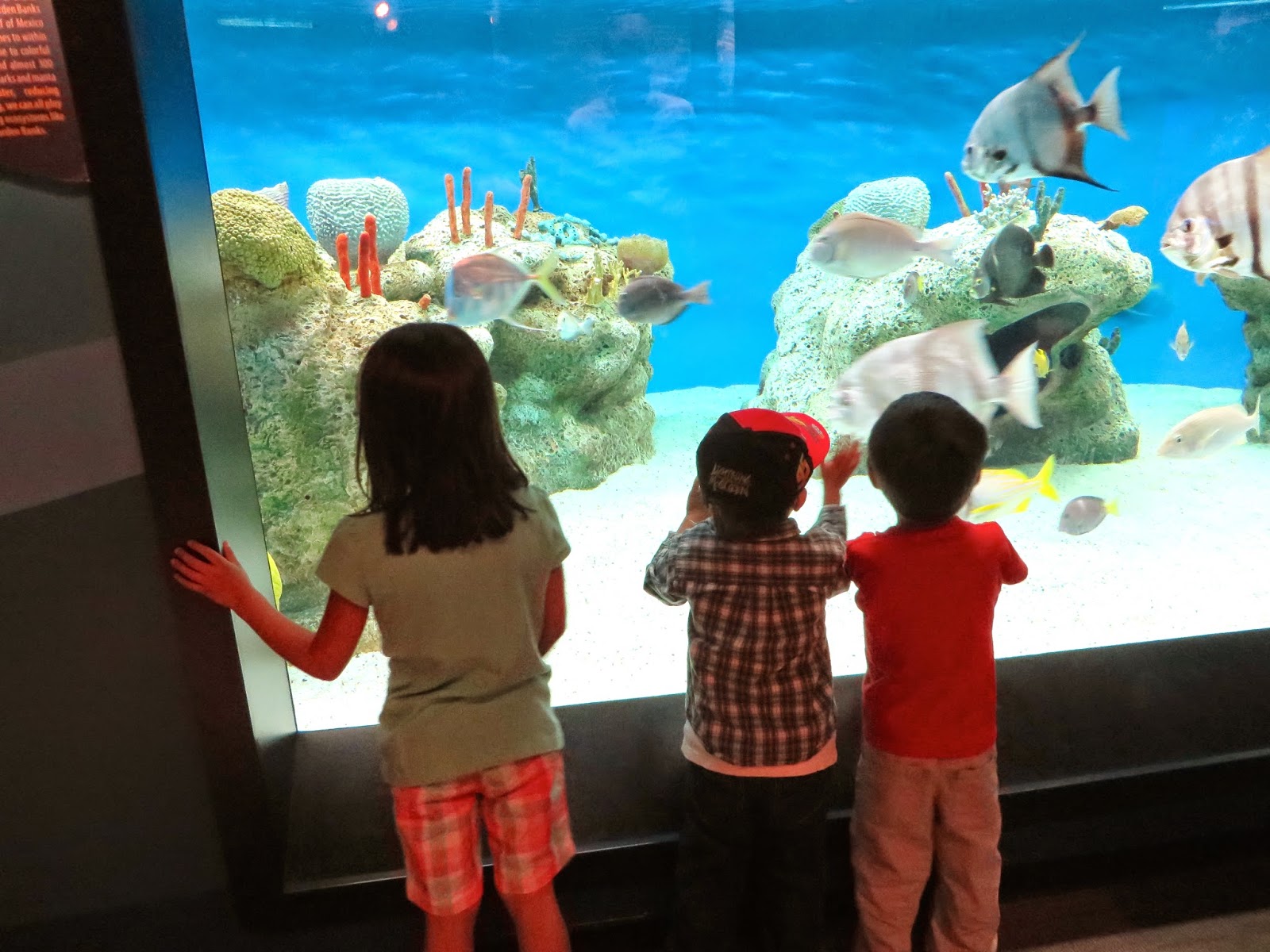
McWane Science Center, Birmingham AL 2014
"When we start off in life, we look at reality with wonder, but it isn't the intelligent wonder of the mystics; it's the formless wonder of the child. Then wonder dies and is replaced by boredom, as we develop language and words and concepts. Then hopefully, if we're lucky, we'll return to wonder again." --Anthony De Mello, Awareness

We've just come off a most adventurous road trip, hubby and I, in which we traveled 500 miles with granddaughter #1 (almost six) and grandson #2 (3 years old) to visit grandson #1, who celebrated his fourth birthday while we were there. What a trip. What a hoot!

We didn't know if we were up to it, taking two little ones on a 9-hour car ride. But you know what (one of Adrian's favorite sayings, btw)? We not only survived, but we had a great time.

The best, of course, was visiting our son and his family and the opportunity for the cousins to once again play together. An extra bonus included a trip to the McWane Science Center in Birmingham. As the photo shows, the aquarium was a big draw. You should have seen--and touched--the big stingray in the pool!

One evening we also joined in on a neighborhood get-together where there were hotdogs, popcorn, water balloons and water slides--and a small nearby stream filled with tadpoles. Have you ever tried to catch a tadpole? They are very elusive to little hands.

Let's not forget the birthday celebration itself--all decked out in a Spiderman-themed cake awesomely decorated by our daughter-in-law (and birthday boy's mother), Suzan. She also led the children in beautiful renditions of songs from the soundtrack of Frozen ( a big movie hit, I understand, of the six-year old crowd) especially "Let It Go." Then there were Legos, the movie Cars, and, oh, a new skill: texting. Quite fascinating to our young reader--and entertaining. Mommy and Daddy were given regular updates as to where we were on the road.

We started out wondering if we could physically make this trip. After all, we still had to drive 500 miles back. We came back wondering about what we would have missed if we hadn't. Mostly it was seeing what we often take for granted through the eyes of the children and recapturing a bit of the sense of wonder ourselves.

I hope I can translate more of a sense of wonder in writing. For me, the best forum for such an exercise--and writing prompt--is trying my hand at poetry. What about you, what piques your sense of wonder? Is an awareness of magical, unusual, amazing, unexpected and downright captivating surprises still strong for you or do you find the feeling lacking? Any tips on how to reignite wonder in writing--and life in general?
_____________________________________________

Wednesday, May 14, 2014

Wildflower Gifts


spring wildflowers 2014
"The earth has music for those who listen." --George Santayana

My favorite wildflower is the violet. There's just something about this shy little beauty that sings a quiet song to me. It reminds me of childhood and Mom and small gifts of grace. And I didn't have to go far to capture a picture of this cluster--they are growing right in my front yard.

In this busy week (don't we all have those?), I'm squeezing in writing as best I can but I'm also pausing to listen to the music that spring's beauty plays. And seeking inspiration as I go. A few gems:

"Flowers don't worry about how they're going to bloom. They just open up and turn toward the light and that makes them beautiful." --Jim Carrey

When you  have only two pennies left in the world, buy a loaf of bread with one, and a lily with the other." --Chinese Proverb

"Forgiveness is the fragrance that the violet sheds on the heel that has crushed it." --Mark Twain

"The violets in the mountains have broken the rocks." --Tennessee Williams

What is your favorite wildflower, and why? How does it inspire you, stir you, give you pause to listen?

p.s. Having trouble stretching time to include writing? A good article is found here: "How to Keep Your Writing in Your Over-the-Top Busy Life."
________________________________

Wednesday, May 7, 2014

A Writer's Primary Goal

photo courtesy sxc.hu

"A writer's heart must  beat. A reader's heart must hear it." --Patricia Lee Gauch

Worthy goal for sure--and one to continually aim for.

How would you describe your goal for the writing you do?
____________________________

Tuesday, April 29, 2014

On Voice, Listeners, and Francine Prose

April Scouts 2014
A Wise Voice
It's not only what you say,
but the manner in which you say it.
It's not only the language you use,
But the tone in which you convey it.
Words come from the mind
And grow by study and art,
But tone leaps from the inner self,
Revealing the state of the heart.
---Author Unknown

I'm not sure what was the state of the heart of these guys, but their voices were truly loud and insistent this past Sunday morning. I kept hearing their call and thought they were a part of a flock flying overhead. But when the noise didn't go away, I went looking. There they were, on the barn roof next door. And they stayed a looooong time--and made A LOT of noise. What in the world were they doing? Who were they talking to? Who was listening?

Francine Prose poses similar thoughts on the writer's world in Reading Like a Writer, A Guide for People Who Love Books and For Those Who Want to Write Them. Chapter 5, Narration: 

"The only way I was able to trick myself into writing a first novel, as well as the first short story I published that I liked...was to write both the novel and the story as stories within stories, narratives told by one character to another. Eavesdropped upon by the reader, the storytellers and their audiences appeared at the beginning and end of the works, and occasionally throughout, to interrupt and comment upon the action.

"The reason I say 'tricked myself' was that this device enabled me to overcome one of the obstacles confronting the novice writer. This hurdle disguises itself as the question of voice and of who is telling the story...when in fact the truly problematic question is: Who is listening? On what occasion is the story being told, and why...?

"...For me, writing framed stories not only answered all those troubling questions about the narrator's audience, but also neatly integrated the answers into the narrative itself. I knew not only who was speaking but who was being spoken to, where the speaker and listener were, when and why the event--that is, the telling of the story--was occurring. This permitted me to skip over slow parts of the plot by having the listener become impatient and hurry the narrator along.

"...Was it something that one character would tell another in the way that people tell stories about their lives? Would anyone imagine that these recounted events would hold another human being's interest, and would the reader believe that anyone, even a fictional character, would stay focused and pay attention all the way through?"

My geese friends may have been calling to others in the flock. They may have only been talking to each other. But either way they represented storyteller and listener to me, a necessary pair.

I'll approach voice from a different angle now, by way of a framed story--though I don't intend to climb the barn roof to do it. How about you, what would you say about the writer's voice? Do you have a listener in mind when you write?
___________________________